
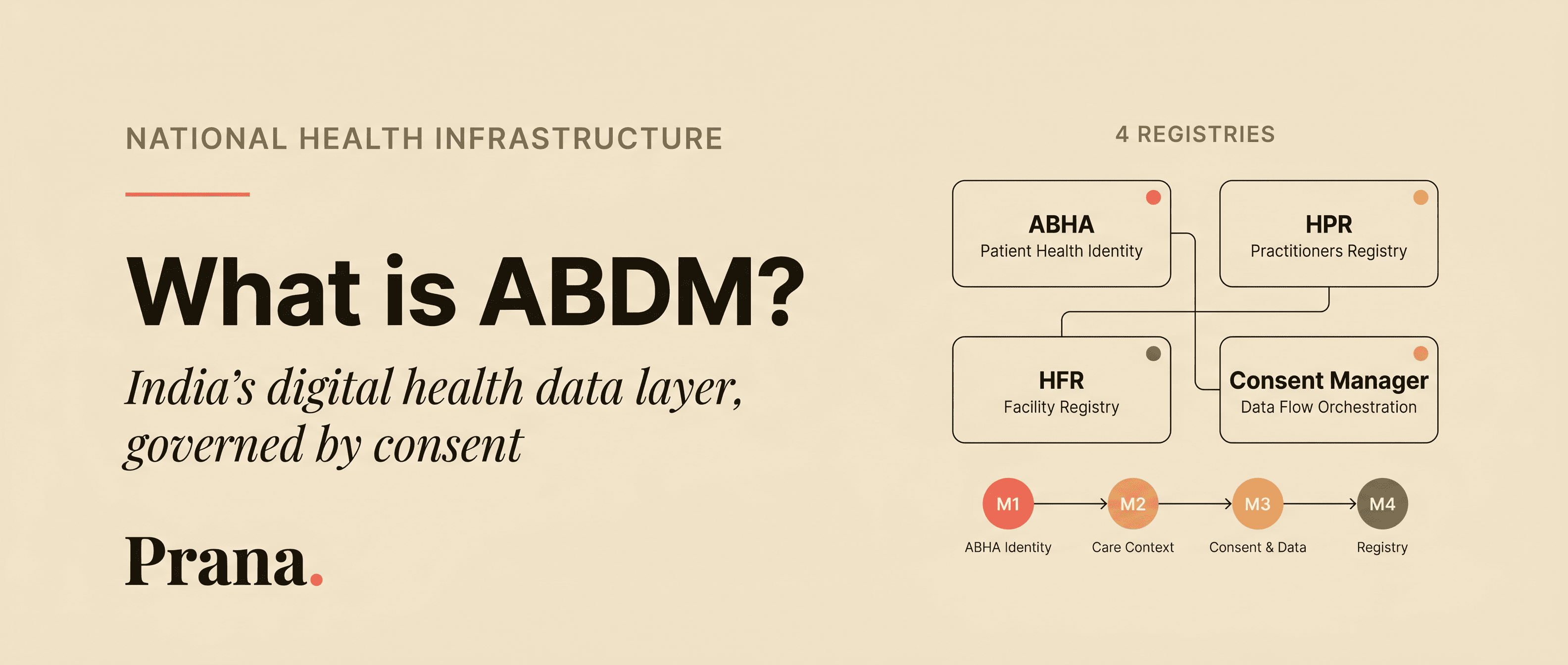
ABDM establishes a unified ecosystem where patients, hospitals, laboratories, insurers, and health applications exchange health data securely, with patient consent governing every transaction. Understanding its architecture is essential for any healthcare system operating in India today.
Four foundational registries
ABDM is built on four national registries that form the backbone of India's digital health infrastructure:
- ABHA (Ayushman Bharat Health Account) - Unified patient health identity: a portable, system-agnostic health ID that follows patients across providers.
- HPR (Healthcare Professionals Registry) - Unique digital ID for doctors and practitioners, enabling verified attribution of health records.
- HFR (Health Facility Registry) - Unique digital ID for hospitals and clinics, required before any facility can participate in ABDM data exchange.
- Consent Manager - Orchestrates consent flows between Health Information Providers and Health Information Users.
The integration journey
ABDM compliance is structured across four progressive milestones. Most facilities start with M1, giving patients a digital health identity. Each milestone builds on the previous, creating a clear progression toward full ecosystem participation.