
INTEROPERABILITY
PRANA · 2026
INTEROPERABILITY

How health data moves between systems

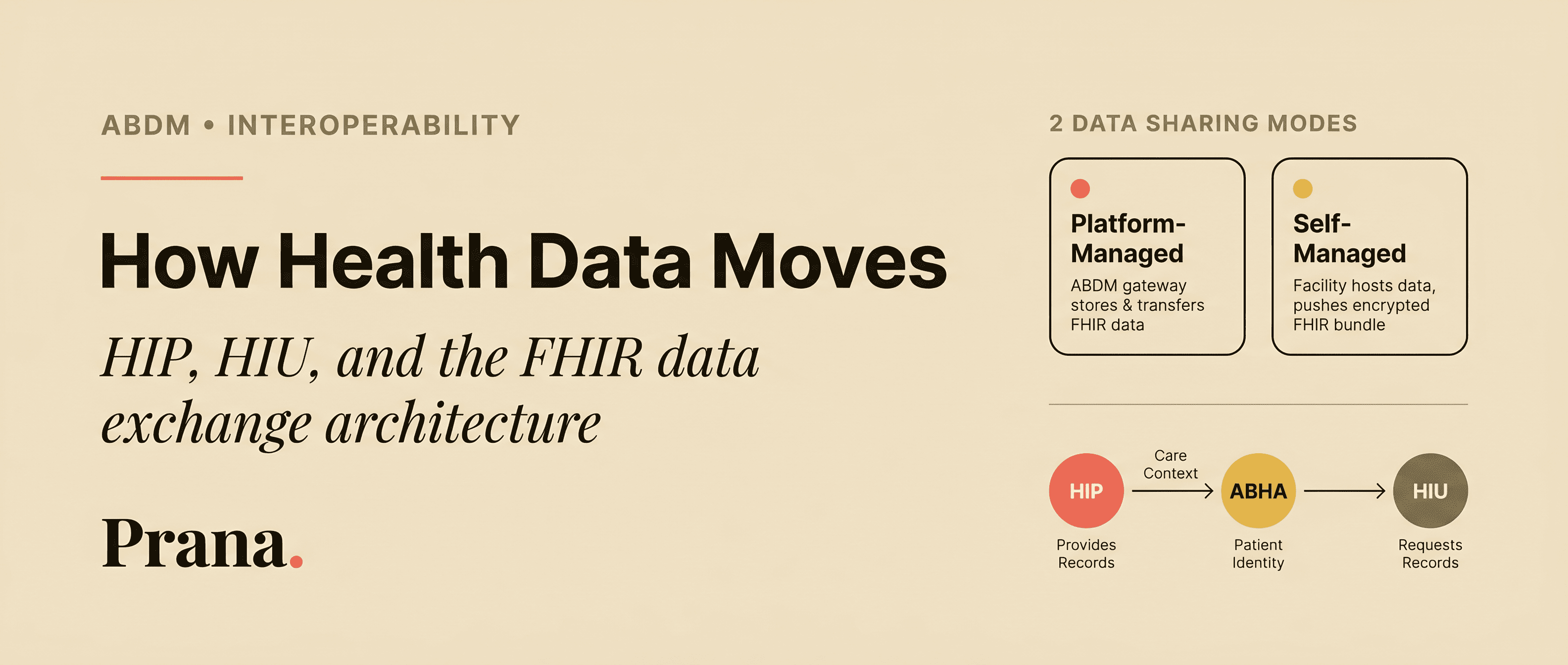
In the ABDM ecosystem, every healthcare facility that holds patient records is a Health Information Provider (HIP). Any system that requests those records, with the patient's permission, is a Health Information User (HIU). Most hospitals eventually need to act as both.

Prana Research|May 2026|5 min read
How health data moves between systems
Architecture diagram showing HMS systems connecting through Prana's interoperability layer to the ABDM digital health ecosystemEXISTING SYSTEMSHospital HMSClinic HMSLab LIMSPharmacy PMSPRANA MIDDLEWAREFHIR TransformConsent EngineData NormalizerEvent BusABDM NETWORKHIP / HIUHIE-CMABHA RegistryENCRYPTED · CONSENT-GATED · AUDITED · FHIR R4 · EVENT-DRIVEN

How health records are structured

A Care Context is the foundational unit of health record organization. It represents a logical grouping of health records from a single clinical encounter: an OPD visit, a lab test, a hospital discharge. When linked to a patient's ABHA identity, that context becomes discoverable and shareable across the ecosystem.

Two modes of data sharing

ABDM supports two architectural approaches to health data exchange:

  • Platform-Managed - The ABDM gateway platform stores FHIR data. When a requesting entity needs records, the platform handles the data transfer automatically.
  • Self-Managed - The facility retains health data on its own infrastructure. When records are requested, it responds to a data fetch event and pushes the encrypted FHIR bundle.

Explore further

healthcare interoperabilityHIPHIUhealth data exchangecare context
Share